
Key Takeaways
- Businesses use the 1099-NEC form when they pay $600 or more to nonemployees, such as independent contractors, freelancers, or self-employed workers during the tax year.
- Both the IRS and the contractor must receive their copies by January 31, which is earlier than many other tax forms.
- The IRS brought back the 1099-NEC in 2020 specifically for nonemployee compensation, while the 1099-MISC now covers the other types of payments like rent and prizes.
- Businesses that miss the deadline or file incorrectly face fines starting at $60 per form that can add up quickly, especially if the IRS thinks you ignored the rules on purpose.
Tax season is here, and if you’re self-employed or run a business that works with contractors, you need to know about the 1099-NEC form. But what does 1099-NEC mean?
This IRS form reports payments made to independent contractors and freelancers, and getting it right matters for both businesses and the people they pay.
Let’s break down everything you need to know about the 1099-NEC form so you can handle your taxes without stress.
- What is a 1099-NEC?
- What does nonemployee compensation mean?
- Who can file the 1099-NEC form?
- What information does the 1099-NEC form require?
- What’s the difference between Form 1099-NEC and 1099-MISC?
- What are the 1099-NEC tax filing deadlines?
- How to file Form 1099-NEC
- What are the penalties for filing Form 1099-NEC incorrectly or late?
- Frequently Asked Questions
- Ensure 1099-NEC compliance
What is a 1099-NEC?
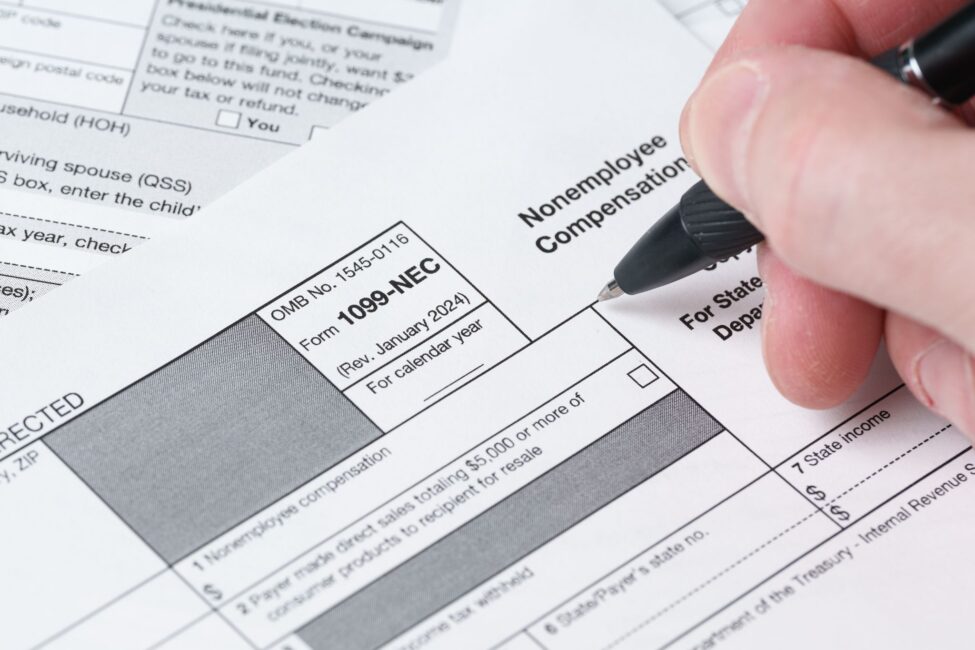
Form 1099-NEC (nonemployee compensation form) is the IRS form businesses use to report payments (of at least $600 for the entire year) made to independent contractors, freelancers, self-employed individuals, and sole proprietors. All of these types of payments are considered “nonemployee compensation” because a contractor or freelancer is technically not an employee of the business that’s paying them. Form 1099-NEC is one of several 1099 tax forms, which also include:
- 1099-INT (for interest income)
- 1099-MISC (for miscellaneous income)
- 1099-DIV (for dividend and distribution income).
What does nonemployee compensation mean?
Nonemployee compensation is payment made to workers who aren’t employees of the business that’s paying for the service being provided. These self-employed individuals are usually independent contractors and freelancers.
Nonemployee compensation doesn’t include payment used with different forms, such as 1099-MISC, or employee wages that are reported on Form W-2.
Examples of nonemployee compensation
Examples of nonemployee compensation include:
- Fees paid to independent contractors, freelancers, consultants, and other self-employed workers
- Money paid to attorneys for providing legal services
- Professional service fees, such as fees to accountants, architects, contractors, and others
- Commissions paid to nonemployee salespeople that are subject to repayment but not repaid during the calendar year
Who can file the 1099-NEC form?
If a business pays at least $600 to a nonemployee during the course of a year, it needs to file a 1099-NEC form. If you’re self-employed and were paid more than $600 by a business for your services, you’ll receive Form 1099-NEC from that business for you to include in your tax documents when you file. The payer typically needs to file Form 1099-NEC by January 31 so the nonemployee can include it in their tax return.
What information does the 1099-NEC form require?
Both the payer/business and the payee/nonemployee must provide certain information on Form 1099-NEC. This includes:
- Payer’s information. This includes business name, address, and taxpayer identification number.
- Nonemployee/recipient information. The recipient’s name, address, and taxpayer identification number (which may be a Social Security number or an employer identification number, known as an EIN).
- Total nonemployee compensation. The total sum of money paid to the nonemployee during the tax year. This number will be the gross amount, before any taxes are subtracted.
- State information. This only applies if state taxes were withheld from your paycheck. In this case, the business needs to include their state identification number, the nonemployee’s state, and the amount of state income tax that was withheld.
What’s the difference between Form 1099-NEC and 1099-MISC?
The IRS brought back the 1099-NEC IRS form in 2020 after phasing it out years earlier. Before 2020, businesses reported nonemployee compensation on Form 1099-MISC in Box 7. The change happened to make things clearer and give nonemployee compensation its own dedicated form.
Now, the 1099-NEC handles payments to independent contractors and freelancers, while the 1099-MISC covers other types of payments like rent, royalties, prizes, awards, and medical payments. This separation makes it easier for everyone to know which form to use and helps the IRS process returns more efficiently.

What are the 1099-NEC tax filing deadlines?
Businesses must file Form 1099-NEC by January 31 of every year. This applies to both sending the form to the IRS and providing copies to the contractors who received payment. This date comes earlier than many other tax forms, so it’s one of many important tax dates to mark on your calendar. It’s smart to prepare for tax season early so you’re not rushing to meet this deadline.
How to file Form 1099-NEC
The process of filing Form 1099-NEC involves a few straightforward steps. Whether you’re a business owner paying a contractor or a self-employed person who needs to understand the process, here’s what you need to know:
Step 1: Gather the necessary documents
The business needs information from the contractor, which is usually collected through a W-9 form before the contractor starts work. This form provides the contractor’s legal name, address, and taxpayer identification number.
Step 2: Fill out Form 1099-NEC correctly
You can find Form 1099–NEC on the IRS website, which keeps the most recently updated form available. The business fills out multiple copies. Copy A goes to the IRS, Copy 1 goes to your state’s tax department, and the contractor receives Copies B and 2. Meanwhile, Copy C is kept by the business for its records.
Step 3: Submit your 1099-NEC
Businesses can file electronically or by mail to meet the deadline. Electronic filing is often faster and reduces the chance of errors. Make sure you send the form to both the IRS and your state tax department if required.
If you’re the recipient receiving a 1099-NEC, you don’t file this form directly with the IRS. Instead, you use the information from Box 1 to report your income on Schedule C of your Form 1040 when you file your tax return. This income will help determine whether you owe taxes or get a refund when you file. The business has already sent Copy A to the IRS, so the IRS will be checking to make sure the income you report matches what the business reported on your 1099-NEC.
What are the penalties for filing Form 1099-NEC incorrectly or late?
If a business doesn’t issue Form 1099-NEC to the IRS and the recipient’s state tax department by January 31, the business may be forced to pay a penalty. The penalty amount depends on how late you file:
- Up to 30 days late: $60 per form
- 31 days late through August 1: $130 per form
- After August 1 or not filed at all: $340 per form
- Intentional disregard: $680 per form with no maximum limit
The IRS also charges interest on penalties, which increases the amount you owe until you pay your balance in full. There are maximum penalty caps for small businesses, but if the IRS determines you intentionally disregarded the filing requirement, there’s no limit to how much you could owe.
If you’re self-employed and don’t receive your 1099-NEC form from the business or businesses you provided service to in time to file your taxes, it’s recommended that you estimate and report your nonemployee compensation to the best of your knowledge. Keep in mind that under-reporting or inaccurately reporting your income can result in penalties and additional taxes owed. On the positive side, you may be eligible for tax write-offs that can reduce your tax burden.

Frequently Asked Questions
Where can I get a 1099-NEC form?
You can download Form 1099-NEC directly from the IRS website. The site always has the most current version available. You can also purchase official forms from office supply stores or through tax software that handles 1099 filing.
What types of income are reported on Form 1099-NEC?
Form 1099-NEC reports payments to the IRS that businesses made to independent contractors, freelancers, and other nonemployees for services they provided. This includes fees for professional services, consulting work, commissions, and payments to attorneys. It doesn’t include employee wages, interest, dividends, or other types of income reported on different forms.
What is the minimum payment threshold for 1099-NEC reporting?
The threshold depends on the tax year. For 2025, businesses must file a 1099-NEC if they paid a nonemployee $600 or more during the tax year. Starting with tax year 2026, the threshold increases to $2,000. This change comes from the One Big Beautiful Bill Act, signed in July 2025, which raised the reporting requirement to reduce administrative burden on small businesses.
The threshold is cumulative, so even if you made several smaller payments throughout the year, if they add up to the threshold amount or more, you need to file the form. Beginning in 2027, the $2,000 threshold will be adjusted annually for inflation.
Ensure 1099-NEC compliance
Tax forms like the 1099-NEC can feel overwhelming, but you don’t have to figure them out alone. If you’re self-employed or run a small business, having a trusted tax preparer makes all the difference during tax season. Sun Loan offers professional tax preparation services to help you file accurately and take advantage of every deduction you’re entitled to.

